Taj Mahal, Agra
Visiting the Taj Mahal: what it is actually like
A tomb built for one grief.
It is not a palace and it is not a temple. It is a grave — the one an emperor built for the wife who died having their fourteenth child, and then spent twenty-two years and the labour of twenty thousand people making sure the whole world would remember her name. Mumtaz Mahal. You are, technically, visiting her.
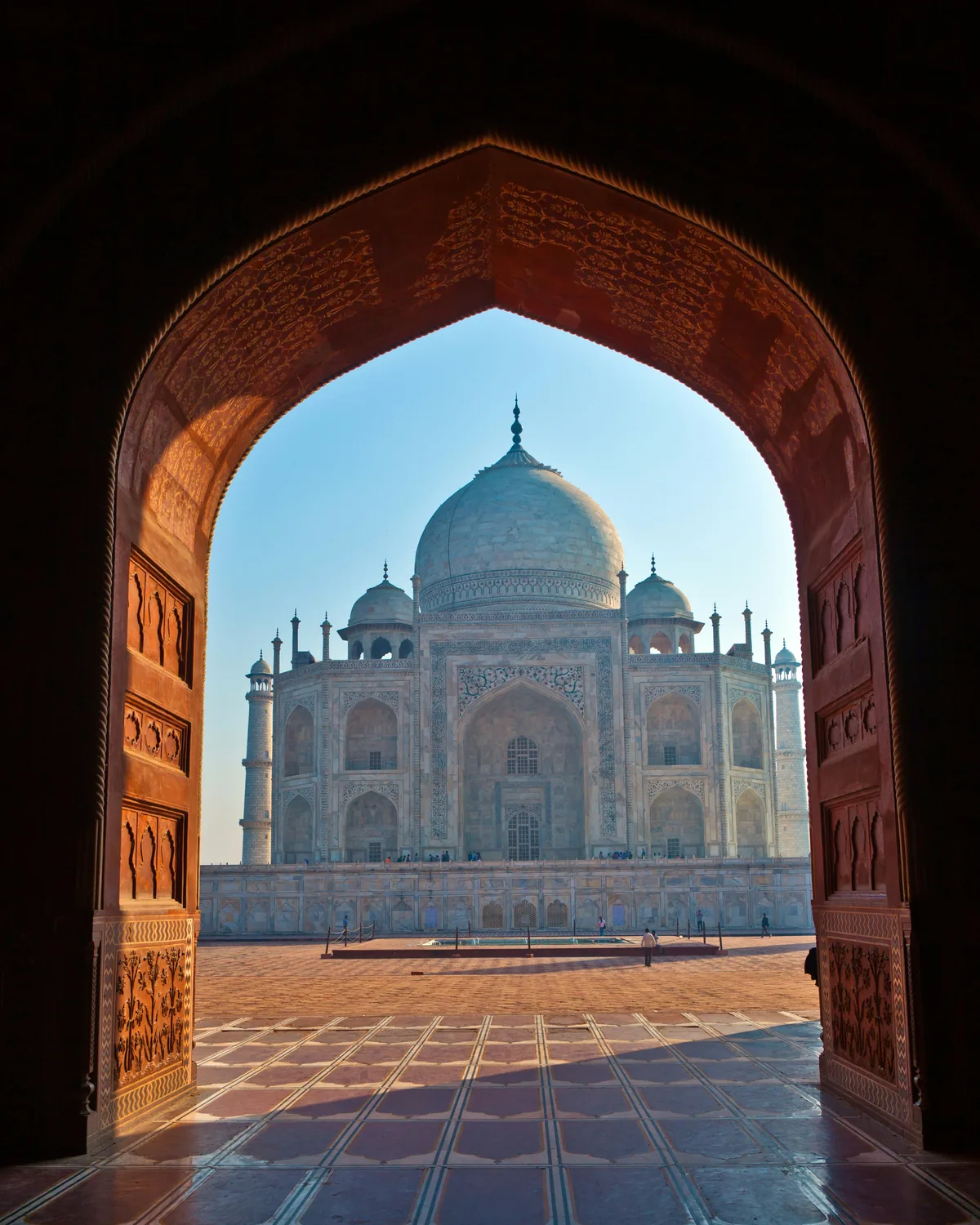
- Name: Taj Mahal — "crown of the palace," though nobody lives here
- Age: 372 — finished 1653, still the standard everything else is measured against
- Mood: Grieving, beautifully, forever
- Best time: the first light after the gates open at sunrise
- Red flag: Closed Fridays. Turns up thousands of strangers into your photo by 9am
How do you want to meet her?
The photos lied by leaving out the scale. It is bigger and quieter than you think.
The Anxiety
The queue at the gate looks like a small country. It moves. Buy the ticket online, take the east gate, and be there before the sun clears the wall.
The Awe
It floats. The reflecting pool doubles it, the marble has no seams your eye can find, and for a second the crowd goes quiet without being asked. Everyone feels it.
- Walk through the Great Gate without looking up. Then look up. That pause is the whole design.
- Find the marble inlay up close — flowers made of thirty cut stones each. No paint anywhere.
Grief, then centuries.
- 1631 — Mumtaz Mahal dies bearing their 14th child. Shah Jahan, the story goes, turns grey within months and orders a tomb worthy of her.
- 1653 — 1653: Finished after 22 years — 20,000 workers, 1,000 elephants, white marble hauled 300km from Makrana.
- 1658 — 1658: Shah Jahan is deposed by his son and imprisoned in Agra Fort — where he spends eight years watching the Taj across the river.
- 1908 — 1908: After decades of neglect and looting, Viceroy Curzon orders a full restoration. The gardens are re-landscaped British-style — that is why they look the way they do.
- 1983 — 1983: UNESCO World Heritage. Tourism becomes the story; so does the pollution eating the marble.
- 2026 — Tonight: closed, as every night — it opens at sunrise. Periodic mud-pack facials pull the yellowing out of the stone. ~6 million visitors a year.
She changes depending on where you stand.
0M — ON THE PLINTH
Shoes off, marble cool underfoot. Up here the inlay is not decoration — it is thirty stones per flower, and the walls glow from within where the light passes through. Tip: Shoe covers are included with the ticket. Socks save you the hot marble by 10am.
150M — THE REFLECTING POOL
The postcard, in person. The Taj doubled in the water, the cypress avenue leading your eye straight to it. This is the bench everyone fights for at 6am. Tip: The Diana bench is on the right of the pool. Get there first or wait 40 minutes for a clear frame.
1KM — THE GREAT GATE
The reveal. Step through the red sandstone gateway and the Taj appears framed in the arch, small and complete, growing as you walk toward it. Gaudí wished he could stage a reveal this good. Tip: Turn around at the tomb and look back at the gate — the calligraphy letters grow upward so they read the same size from below.
2KM — MEHTAB BAGH
Across the Yamuna, the "moonlight garden." The Taj from behind, floating over the river, almost nobody around. Sunset here is the version the crowds miss. Tip: A 15-minute drive to the far bank. Go for sunset — the marble turns amber and the river carries the reflection.
Not practical info. What it actually feels like.
SOUND
Bare feet on marble + guides in eight languages + the echo under the dome that a guard will demonstrate with one long note + parakeets in the garden trees at dawn.
FEEL
Cold marble underfoot even in heat, the grit of red sandstone at the gate, the press of the crowd easing the moment you step onto the plinth.
SMELL
Cut grass and river damp at sunrise, marigold from the ticket-gate sellers, dust and diesel from Tajganj that stops dead inside the walls.
LOCAL WHISPER
"Everyone photographs the front. Walk to the mosque on the west side — same Taj, gold morning light on it, and you will be almost alone." — Rahul, guide at the east gate, eleven years.
“Go at sunrise, and do not rush the Great Gate. Everyone runs through it toward the tomb — but the whole building was designed around that framed first glimpse. Stand still in the archway for thirty seconds. Then walk. It is the closest a building comes to holding its breath with you.” — Anyta Ali, Next Getaway
Questions you might have
Is sunrise really worth the early start?
Yes, and it is not close. The marble is pink and soft, the crowds are a fraction of midday, and the heat has not arrived. Miss sunrise and you are seeing a different, harder building.
Is the Black Taj real?
No — the legend that Shah Jahan planned a black-marble mirror-image across the river for himself is almost certainly a myth. What is real: he was imprisoned before he could build anything, and lies buried inside the white Taj beside Mumtaz.
How long do I need?
Two to three hours does it — an hour of that just standing and looking. Add a separate sunset trip to Mehtab Bagh across the river if you want the version without the crowds.
Insider map
- The reveal — Great Gate — walk through slow
- The bench — Reflecting pool — 6am or wait
- Gold-light angle — West mosque side — near empty
- Shah Jahan's cell — Agra Fort — he watched from here
- Sunset, no crowd — Mehtab Bagh — across the river
Taj Mahal facts, ratings and entry info · All things to do in Agra · ✦ Generate an Agra Itinerary with AI